


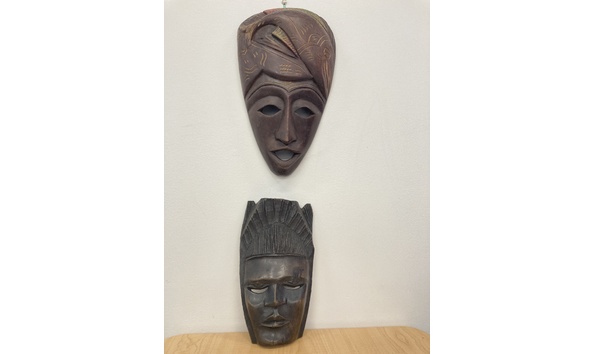
Haitian Masks (pair)
Haitian masks carry deep cultural and artistic significance, closely tied to Haiti's vibrant traditions, carnival celebrations, and the nation's complex history.
Cultural Significance
- Expression of Identity: Haitian masks reflect the country's unique blend of African, Indigenous Taíno, and European influences, showcasing Haiti's cultural diversity.
- Storytelling and Folklore: Masks are used to portray characters from Haitian folklore, mythology, and history, keeping oral traditions alive through visual and performative art.
Carnival and Celebration
- Carnival Performances: During Haiti’s vibrant Kanaval (Carnival) celebrations, masks are central to dances, parades, and performances. They embody characters that mock societal structures, celebrate freedom, or convey moral lessons.
- Resistance and Satire: Historically, masks have been used to critique colonial powers, address political injustices, or mock authority through humor and satire, emphasizing Haiti's history of resistance.
Artistic Value
- Craftsmanship: Haitian masks are often handcrafted from materials such as wood, papier-mâché, and metal, showcasing intricate details, bold colors, and symbolic patterns.
- Visual Storytelling: The vibrant and expressive designs capture themes of resilience, struggle, joy, and spirituality, making them a powerful form of visual art.
Modern Relevance
- Cultural Pride: Masks remain symbols of Haiti’s artistic and spiritual heritage, celebrated both locally and internationally.
- Global Influence: Haitian masks inspire contemporary art and fashion, representing the island's creativity and resilience.
Haitian masks are a profound expression of the nation's history artistic ingenuity, embodying its struggles, triumphs, and cultural identity.
Donated by :Name : Dr Junia JeanGilles
 What is CharityAuctionsToday?